
It is common for Sales and Marketing to argue about lead quality. This is despite sophisticated scoring models, robust automation, and years of “alignment” initiatives. Problems are often rooted in teams being unable to agree on what a good lead actually is. The lack of accepted qualification criteria means there is no feedback loop from sales to marketing explaining why leads were disqualified.
For RevOps leaders, this creates friction: slow handoffs, inconsistent follow-up, and an unpredictable pipeline.
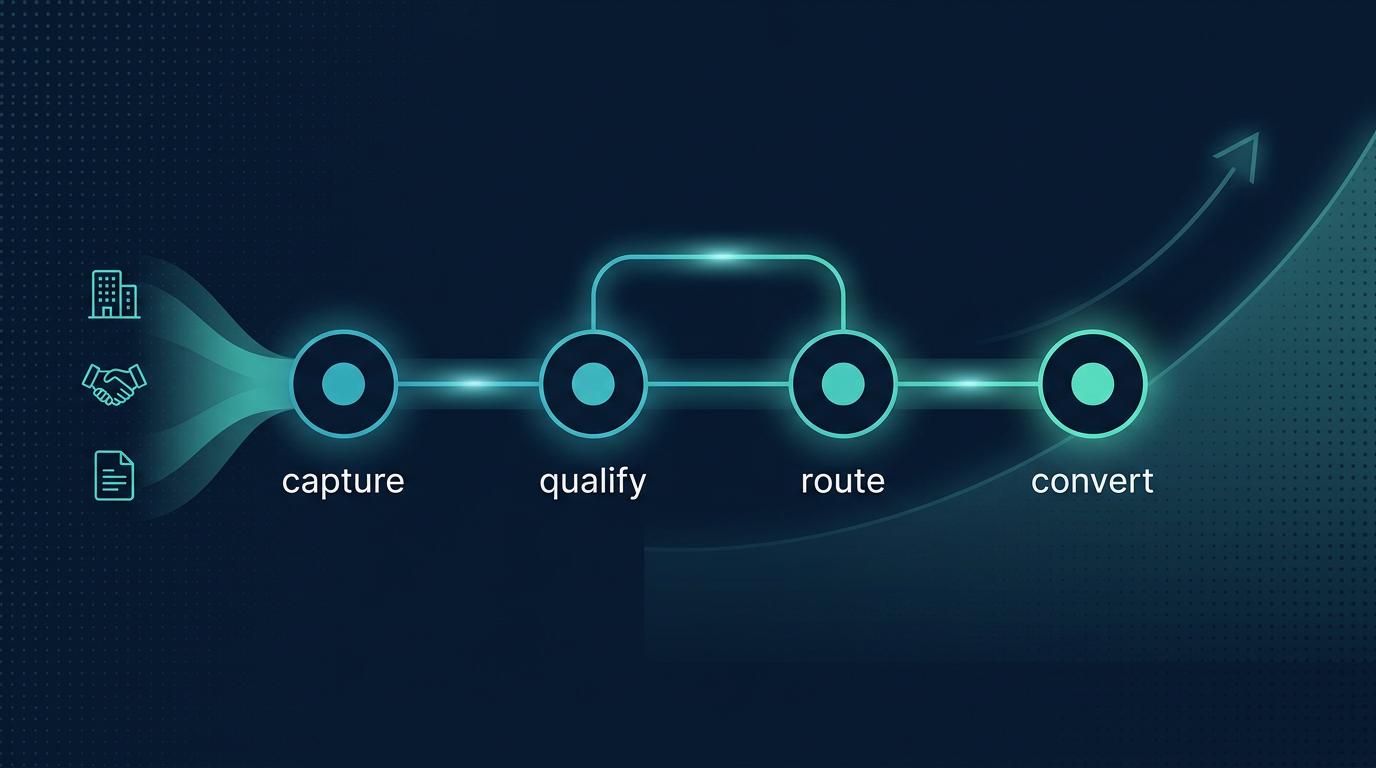
Effective lead scoring requires a unified system.
This guide breaks down how to align your scoring strategy with routing logic and SLAs (Service Level Agreements), so Sales and Marketing have the same definition of “qualified” and the same commitment to action.
Why Lead Scoring Breaks (Even When It’s Built Well)
Before diving into lead scoring, you must ensure you have a clear definition of what “qualified” means. Without the criteria for qualified leads being agreed the system will fail.
Most lead scoring models fail not because the math is wrong, but because the model lives in a vacuum. This shows up in four common symptoms:
- The scoring model is too complex for Sales to trust or understand.
- High scores don’t map to real conversion patterns from your historical data.
- Sales and Marketing use different definitions of “qualified” and “disqualified”.
- Leads aren’t routed based on the score, so speed-to-lead and accountability evaporate.
A scoring model is the intent engine of your revenue motion, but without a routing system and SLAs behind it, even the smartest model collapses.
The Alignment Framework: Scoring, Routing and SLAs
Revenue organizations win when they align three things:
1. Scoring
Scoring identifies intent and signals readiness to buy.
2. Routing
Routing gets high-intent leads to the right rep immediately.
3. SLAs
SLAs define how quickly and how consistently Sales must act on those leads.
Each part of the framework strengthens the others. Scoring without routing is theoretical. Routing without SLAs is chaos. SLAs without accurate scoring are unenforceable.
Key Steps to Aligning Sales and Marketing Lead Scoring
Step 1: Build a Lead Scoring Model That Reflects Real Buyer Intent
A scoring model that drives revenue does one thing well: it predicts the likelihood of a real sales conversation or opportunity.
RevOps teams can build an intent-led model by:
- Analyzing historic conversion data. Start with the highest-intent actions and opportunities.
- Weighing behavioral signals over vanity signals. Webinar attendance, pricing visits, repeat product engagement, and BOFU content matter far more than top-funnel clicks.
- Balancing demographic and firmographic fit. ICP alignment strengthens, but never replaces, intent scoring.
- Hosting cross-functional scoring workshops. Sales, Marketing, and RevOps must co-own the scoring tiers.
Output: A shared definition of “high-intent” that both GTM teams trust.
Learn more about defining your Ideal Customer Profile (ICP)
Step 2: Create Routing Rules That Actually Enforce Speed and Ownership
Once you’ve identified high-intent leads, routing determines whether they convert or disappear.
Effective routing rules:
- Assign leads based on score ranges, not generic MQL definitions.
- Use dynamic logic. For example, territory, AE (Account Executive) availability, product line, inbound vs. outbound readiness.
- Automate everything. Manual routing is slow, error-prone, and impossible to scale.
- Make ownership transparent. Every lead should have one accountable owner at all times.
The goal is simple: High-intent leads reach the right rep in seconds, not hours.
Step 3: Operationalize the System With SLAs That Stick
This is where alignment becomes real. Your SLAs should be tied directly to lead score tiers.
Sample SLA Structure (Score-Driven):
- Response time:
- A-scores: < 5 minutes
- B-scores: < 2 hours
- C-scores: < 24 hours
- Follow-up cadence: Define the number of touches and the timeline.
- Disposition requirements: Sales must categorize outcomes consistently (e.g., disqualified reason codes).
- Recycle process: Leads without immediate intent are returned to Marketing with clear next steps.
Visibility matters. Dashboards, alerts, and regular reporting keep SLAs top-of-mind and prevent handoff drop-off.
Step 4: Measure What Really Matters
To keep scoring and routing effective in the long term, RevOps should track performance across the entire lead lifecycle.
Key metrics:
- MQL → SQL conversion rate by score tier
- Response time by rep and team
- Lead life cycle duration from inbound to first contact
- Recycle and reactivation rates
- Pipeline generated per score tier
- Revenue attribution linked to score categories
Quarterly reviews ensure your system keeps up with market shifts, product updates, and GTM motions.
What Alignment Looks Like in Practice
Imagine this scenario:
Before:
Your Marketing team generates “high-quality” leads, but your Sales team dismiss half of them. High-intent leads wait hours for follow-up. Routing rules depend on rep availability or manual assignment. Quarterly meetings devolve into finger-pointing.
After:
Scoring tiers clearly map to conversion likelihood. Routing is automated and instantaneous. Sales respond to A-leads within minutes because SLAs are visible and enforced. Every lead is tracked, every handoff is clean, and the pipeline becomes predictable.
Teams stop debating quality and start scaling revenue.
Common Pitfalls to Avoid
- Overweighting low-intent actions (e.g., email opens).
- Changing the scoring model without communicating to Sales.
- “Set it and forget it” routing logic.
- SLAs without executive sponsorship.
- Assuming high volume = high intent.
Build a Revenue Engine That Converts Faster
When Sales and Marketing align around scoring, routing, and SLAs, you stop chasing the wrong leads and start accelerating the right ones.
A unified scoring and routing system doesn’t just improve handoffs, it transforms your entire revenue workflow.