
Modern revenue teams rely on data, automation, and precise workflows to scale. Lead scoring sits at the center of that ecosystem, connecting marketing engagement data, CRM logic, and lead routing automation to ensure high-intent prospects are activated at the right moment.
This guide explores how lead scoring works at a technical level, how to design scalable models, and how scoring integrates with lead routing to drive predictable revenue outcomes.
What Is Lead Scoring and Why It Matters in Revenue Operations
Lead scoring is a rules-based or algorithmic method of ranking leads based on fit, intent, and engagement signals. Scores are generated using data from:
From a RevOps perspective, lead scoring:
- Standardizes qualification criteria across teams
- Enables automation at scale
- Improves data integrity in CRM pipelines
- Reduces friction between marketing and sales
Without a structured scoring model, downstream systems (including lead routing, SLAs, and forecasting) become unreliable.
Explore our Lead Scoring Services (internal service link) designed for scalable RevOps frameworks.
How Lead Scoring Works Within Lead Routing Architectures
Lead scoring functions as a decision layer within your revenue stack, becoming more powerful when combined with lead routing services.
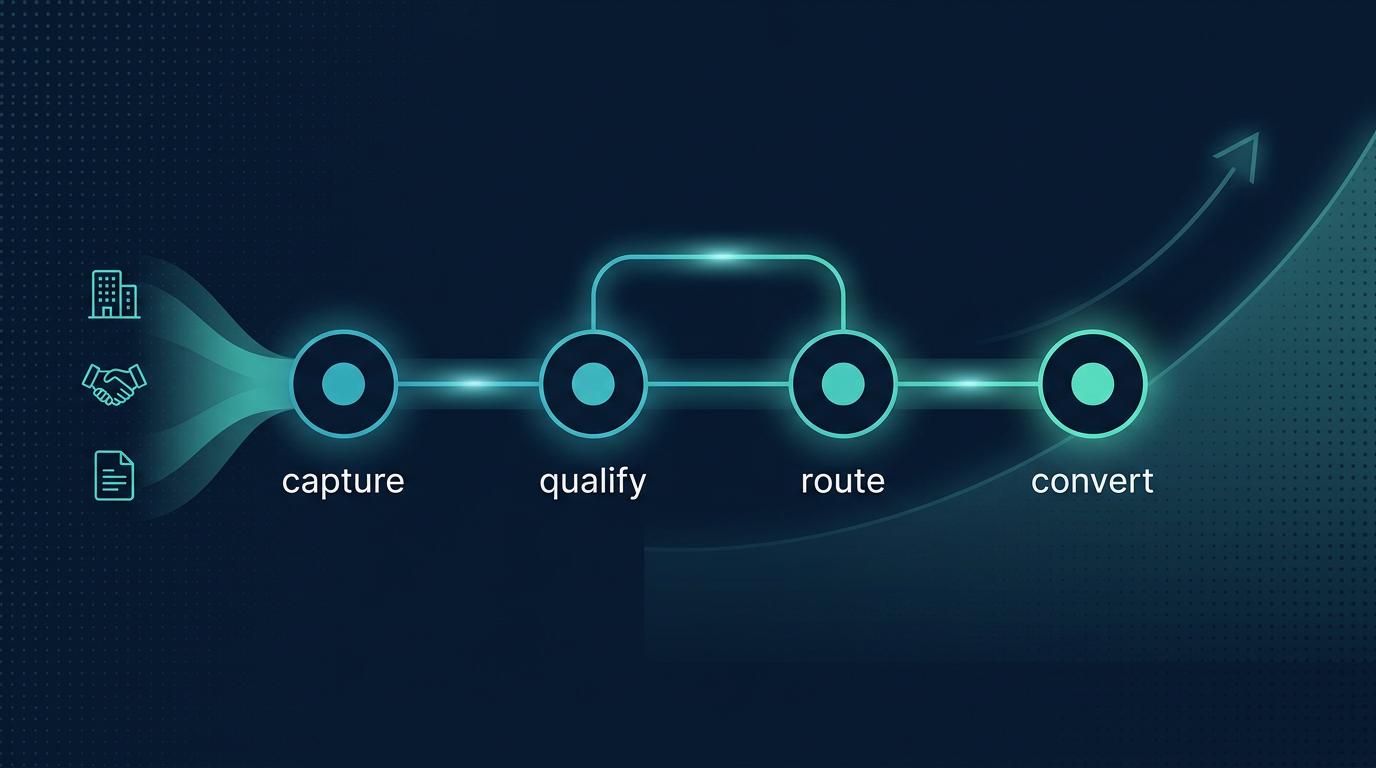
A typical workflow could look like:
- Lead engages with tracked assets
- Behavioral and demographic data is captured
- Scores are calculated in real time
- Thresholds trigger routing, alerts, or workflows
- Lead routing services assign ownership based on rules
When scoring and routing systems are tightly integrated, teams can enforce:
- Speed-to-lead SLAs
- Territory and account-based logic
- Skill-based rep assignment
See how this integration works in practice with our Lead Routing Services (internal service link).
Benefits of Lead Scoring and the Operational Cost of Not Implementing It
Operational Benefits
- Automated qualification at scale
- Reduced manual CRM triage
- Higher data confidence for reporting
- Improved conversion metrics across funnel stages
The Hidden Technical Debt of No Lead Scoring
Without scoring, organizations face:
- Inconsistent MQL definitions
- CRM noise and bloated pipelines
- Broken routing logic
- Inaccurate attribution and forecasting
Over time, this technical debt slows growth and limits automation maturity.
Learn how structured scoring eliminates funnel inefficiencies with our Hidden Costs of Not Having a Lead Scoring System article.
Lead Scoring Models: Behavioral vs. Demographic Data
The strongest scoring models balance:
- Behavioral intent (what the buyer is doing)
- Demographic fit (who the buyer is)
This prevents sales teams from chasing interest without buying power, or ignoring decision-makers who aren’t yet active.
Behavioral Scoring (Intent Signals)
- Pricing page visits
- Demo requests
- High-value content engagement
- Product usage events
Demographic Scoring (Fit Signals)
- Role and seniority
- Company size and revenue
- Industry alignment
- Geographic eligibility
High-performing teams blend both to prevent:
- High-intent but poor-fit leads entering sales
- High-fit but low-intent leads being prematurely routed
Read Behavioral vs. Demographic Lead Scoring: What’s the Right Mix?
Building a Scalable, Maintainable and Trusted Lead Scoring Model
Sales adoption matters as much as model accuracy.
Effective lead scoring models are:
- Modular
- Testable
- Continuously optimized
Best Practices
- Align scoring thresholds with routing rules
- Apply negative scoring for disengagement
- Separate inquiry, MQL, and SQL logic
- Regularly validate against closed-won data
Lead scoring should evolve alongside lead nurturing, ensuring automated progression rather than static handoffs.
Read Lead Scoring and Lead Nurturing: The Dynamic Duo for Conversion Growth.
Common Technical and Routing Pitfalls to Avoid
- Overweighting low-signal activities
- Hardcoding static rules
- Ignoring lifecycle stage changes
- Delayed or misconfigured lead routing
- Failing to sync CRM and marketing automation logic
Poor routing can negate even the most sophisticated scoring model.
Avoid these issues with optimized Lead Routing Services (internal service link).
Lead Scoring + Lead Routing as a Unified Revenue System
Lead scoring identifies buyers.
Lead routing ensures speed and accountability.
Together, they:
- Increase connect rates
- Improve rep efficiency
- Drive consistent revenue growth
When scoring and routing operate as a single system:
- Lead response times drop
- Rep productivity increases
- Data quality improves
- Revenue attribution becomes clearer
This unified approach turns engagement data into real-time revenue actions.
See how our Lead Routing Services enable intelligent activation.
Enterprise-Ready Lead Scoring Services
Our Lead Scoring Services help RevOps teams:
- Design custom scoring frameworks
- Integrate with CRM and automation platforms
- Align scoring with routing logic
- Optimize continuously using performance data