
How to Identify High-Value Prospects with Precision
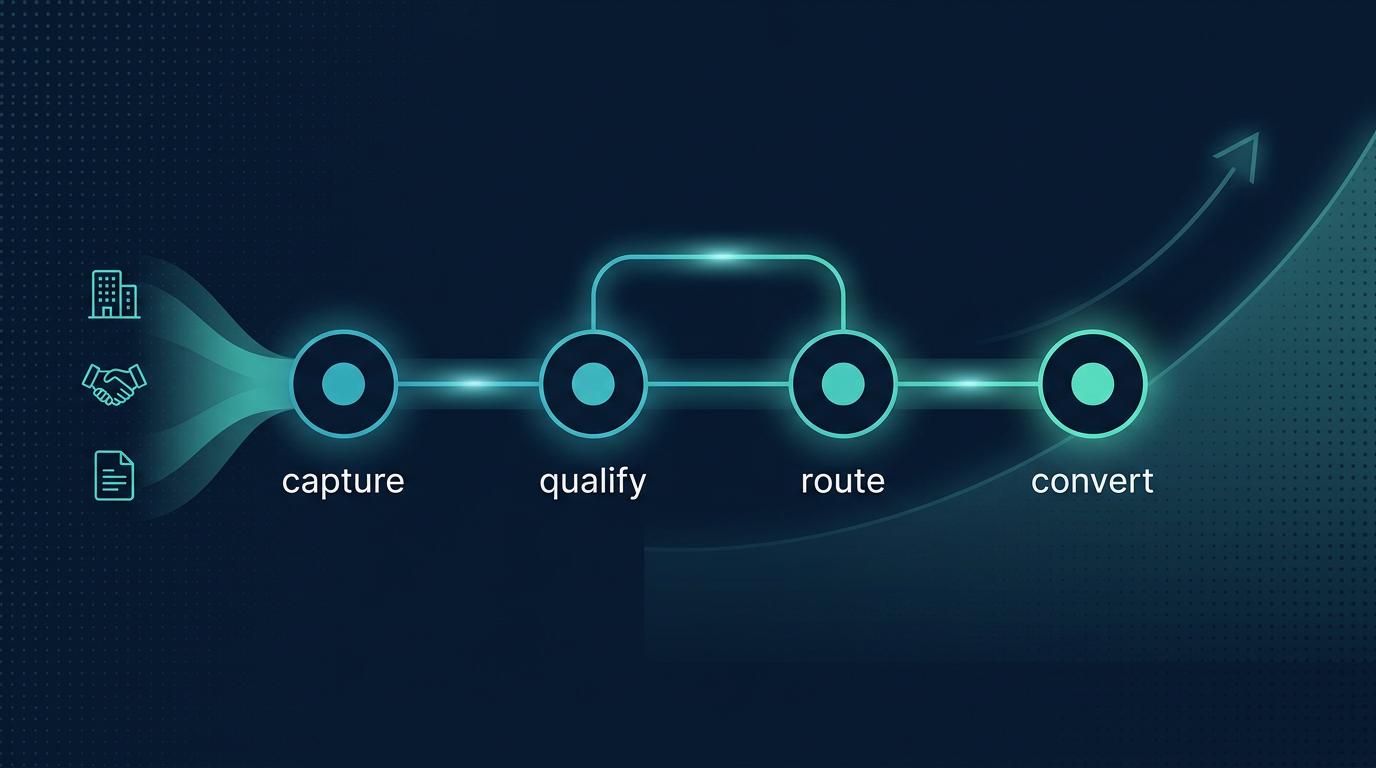
Most modern revenue teams struggle to identify which leads truly warrant time, attention, and sales resources. As buying journeys become more complex and data sources multiply, lead qualification has evolved from a simple checkbox process to a sophisticated, multi-layered system rooted in data, automation, and cross-functional alignment. Getting this right directly impacts conversion rates, pipeline predictability, and customer acquisition efficiency.
This guide outlines the qualification criteria, frameworks, and measurement strategies used by high-performance Marketing, Sales, and RevOps teams. For a deeper dive into how qualification connects to lead scoring, continue with our related article: How to Align Sales and Marketing Around Lead Scores That Actually Convert.
What Lead Qualification Really Means in a Modern Martech Environment
Lead qualification is the systematic evaluation of whether a prospect fits your Ideal Customer Profile (ICP) and demonstrates meaningful signals of buying intent. In today’s Martech ecosystems, qualification is driven by enriched data, behavioral intelligence, and automated workflows across the MAP, CRM, CDP, and integrated data sources.
MAP: Marketing Automation Platform
CRM: Customer Relationship Management (system)
CDP: Customer Data Platform
Understanding the Funnel Context
Qualification sits at the critical MoFu → BoFu transition point, where leads move from passive awareness to active evaluation. Marketing determines who is ready for handoff (MQL), Sales validates readiness for engagement, first by accepting the lead is worth engaging (SAL) and then engaging with them to validate their readiness (SQL). In product-led businesses, product signals (PQL) add another qualification dimension.
MQL: Marketing Qualified Lead
SAL: Sales Accepted Leads
SQL: Sales Qualified Lead
PQL: Product Qualified Lead
With the role of qualification established, the next step is understanding the specific criteria used to categorize leads with precision.
Core Qualification Criteria Used by High-Performance Teams
Effective lead qualification depends on a multi-dimensional assessment of who the prospect is, what their organization looks like, how they’re engaging with your brand, and whether they exhibit clear buying intent. Modern Martech systems pull data from CRM, MAP, CDP, enrichment tools, and intent platforms to evaluate these signals in real time. Understanding the core categories of qualification criteria (demographic, firmographic, behavioral, technographic, and intent) is the foundation for creating a reliable, scalable, and revenue-aligned qualification process.
Next, we break down each dimension of qualification and how it contributes to more accurate lead evaluation.
1. Demographic Criteria (Individual fit)
Demographic criteria evaluate whether the individual aligns with your target personas.
Examples include:
- Job title and seniority
- Decision-making authority
- Department or functional role
This helps ensure you’re engaging contacts capable of influencing or driving purchase decisions.
2. Firmographic Criteria (Company fit)
Firmographic attributes determine whether the prospect’s organization aligns with your ICP.
Key elements include:
- Industry or vertical
- Company size and revenue
- Region or territory
- Growth stage or funding
Fit criteria often form the baseline for automated MQL progression.
3. Behavioral Criteria (Engagement and readiness)
Behavioral signals provide real-time insight into buyer intent and interest level.
High-value actions may include:
- Pricing page visits
- Demo requests or product tour completions
- High-frequency content engagement
- Return visits within short time windows
Behavior scoring typically incorporates recency, frequency, and time-decay logic.
4. Technographic Criteria (Technology environment)
Technographic signals determine whether your solution fits the prospect’s tech stack.
Key considerations:
- Installed technologies
- Competitor tools
- Integration potential
- Infrastructure maturity
Technographics heavily influence suitability for enterprise or technical SaaS solutions.
5. Intent Data Criteria (External buying signals)
Intent data identifies prospects who are actively researching your category or solution.
Sources include:
- First-party website engagement
- Third-party intent platforms
- Review sites and content networks
- Topic-level interest spikes
When qualified with fit criteria, intent data helps prioritize the leads most likely to convert.
Fit vs. Intent
High-value prospects often require both:
- Fit = ICP alignment
- Intent = Demonstrated readiness
This dual-lens approach ensures Sales receives leads that are both relevant and active.
Once you understand the criteria that shape qualification, the next consideration is how teams apply these criteria using structured frameworks.
Qualification Frameworks: From Legacy Approaches to Advanced Martech Logic
While qualification criteria define what you evaluate, qualification frameworks define how you evaluate it. Different frameworks help organize data, score attributes, and determine whether a lead is ready for marketing or sales activation. Traditional models like BANT or CHAMP remain useful in certain contexts, but high-performing RevOps organizations increasingly rely on advanced, data-driven frameworks powered by automation, predictive analytics, and lead-to-account matching. This section explores the full spectrum, from legacy approaches to cutting-edge methodologies.
Next up, an overview of common qualification frameworks and how they fit into modern Martech ecosystems.
1. Traditional Frameworks
Frameworks such as BANT, CHAMP, ANUM and MEDDIC offer structure for rep-led qualification.
- BANT: Budget, Authority, Need, Timeline
- CHAMP: Challenges, Authority, Money, Prioritization
- ANUM: Authority, Need, Urgency, Money
- MEDDIC: Metrics, Economic Buyer, Decision Criteria, Decision Process, Identify Pain, Champion
These frameworks are part of the process of qualifying leads.
2. Data-Driven Qualification Models
Modern teams rely on systems-based qualification supported by:
- Predictive scoring models
- Machine learning-based ICP identification
- Lead-to-account matching (L2A)
- Multi-signal engagement correlation
This reduces subjective decisions and improves MQL/SQL accuracy.
3. Dynamic Qualification in RevOps Systems
Dynamic qualification uses real-time triggers from MAP, CRM, and CDP systems.
Examples include:
- Automated lifecycle stage updates
- Real-time scoring adjustments
- Trigger-based routing
- CDP-driven audience qualification
This allows leads to adjust in or out of qualification status based on evolving behavior.
With the frameworks defined, the next step is operationalizing them into a qualification system that can scale reliably.
How to Build a Qualification System That Actually Works
Building an effective qualification system requires more than a scoring model or a set of rules—it requires a structured, data-backed framework that aligns with your ICP, reflects real buyer behavior, and integrates seamlessly into your revenue technology stack. The most successful organizations combine enriched data, intent insights, automated workflows, and cross-functional alignment to create a qualification engine that consistently identifies high-value prospects. This section outlines the essential components for designing a scalable, high-accuracy qualification system.
To build qualification criteria that consistently delivers a high quality pipeline, we suggest focusing on the four pillars below.
1. Start with a Measurable ICP
A strong ICP includes:
- Tiered segments (Tier 1/2/3)
- Inclusion and exclusion rules
- Enrichment-driven data validation
Your ICP (Ideal Customer Profile) is the foundation of every qualification model.
2. Prioritize High-Intent Behaviors
Look for the actions that historically correlate with opportunities and closed-won deals:
- Pricing page engagement
- Demo requests
- Competitive comparison activity
- Surge-level content engagement
These behaviors act as your top-tier qualification triggers.
3. Align Sales and Marketing Around Shared Definitions
Consistent qualification requires:
- Agreed-upon MQL, SAL, SQL definitions
- Clearly defined follow-up SLAs
- Routing rules tied to qualification outcomes
- Consistent disposition and feedback mechanisms
This alignment also sets the stage for more accurate lead scoring.
4. Automate Everything You Can
Automation ensures accuracy, scalability, and consistency.
Automate:
- Lifecycle staging
- Scoring updates
- Enrichment logic
- Routing
- Alerts and notifications
Automation reduces manual overhead and minimizes human error.
Once your system is in place, the next step is ensuring it’s actually performing as intended.
Measuring Whether Your Qualification System Is Effective
A qualification model is only as strong as its performance in the funnel. To validate that your criteria and frameworks are working, you need to monitor conversion rates, sales velocity, data quality, and feedback loops across marketing and sales. These metrics provide visibility into whether your qualification process is improving pipeline predictability or allowing unqualified leads to slip through. This section breaks down the key indicators that reveal if your qualification system is driving measurable revenue outcomes.
Assess performance using the following categories of metrics and indicators.
1. Conversion Rate Performance
Track progression between key lifecycle stages:
- Lead → MQL
- MQL → SAL
- SAL → SQL
- SQL → Opportunity
- Opportunity → Closed-Won
Sharp drop-offs can reveal qualification gaps or other issues, including poor sales performance and slow follow-ups.
2. Lead Velocity & Follow-Up Time
An effective qualification model accelerates:
- Time-to-first-touch
- Time-to-SAL
- Sales responsiveness
If velocity slows, qualification and routing rules may need refinement.
3. Data Quality & Completeness
Evaluate:
- Enrichment match rates
- Duplicate prevention
- Field completeness
- Routing accuracy
Strong qualification requires strong data integrity.
4. Sales Feedback Loop
Continuous improvement depends on insights from Sales:
- Disqualified lead reasons
- Missed high-intent signals
- MQL quality feedback
- Opportunity conversion insights
This feedback helps refine qualification criteria and scoring logic.
With qualification measured and optimized, you can unify it with lead scoring for a fully aligned revenue engine.
Precise Qualification Creates Predictable Revenue
Strong qualification criteria and frameworks allow you to surface high-value prospects, eliminate wasted effort, and improve conversion rates at every stage of the funnel. When qualification is rooted in enriched data, behavioral intelligence, and automated workflows, it becomes a dependable engine for predictable revenue growth.
If you’re looking to strengthen your qualification logic, optimize your RevOps systems, or align qualification with a scoring model that actually converts, our team can help architect a solution tailored to your growth goals.
And for your next step, explore how qualification and scoring work together…
Read, How to Align Sales and Marketing Around Lead Scores That Actually Convert