
If your funnel is full but conversions are slow, the problem often isn’t lead volume; it’s what happens after leads come in.
Marketing teams invest heavily in demand generation, only to see promising leads stall in the middle of the funnel. Sales teams, meanwhile, are frustrated by leads that look good on paper but aren’t ready to buy. This results in missed opportunities, wasted effort, and a growing disconnect between marketing and sales.
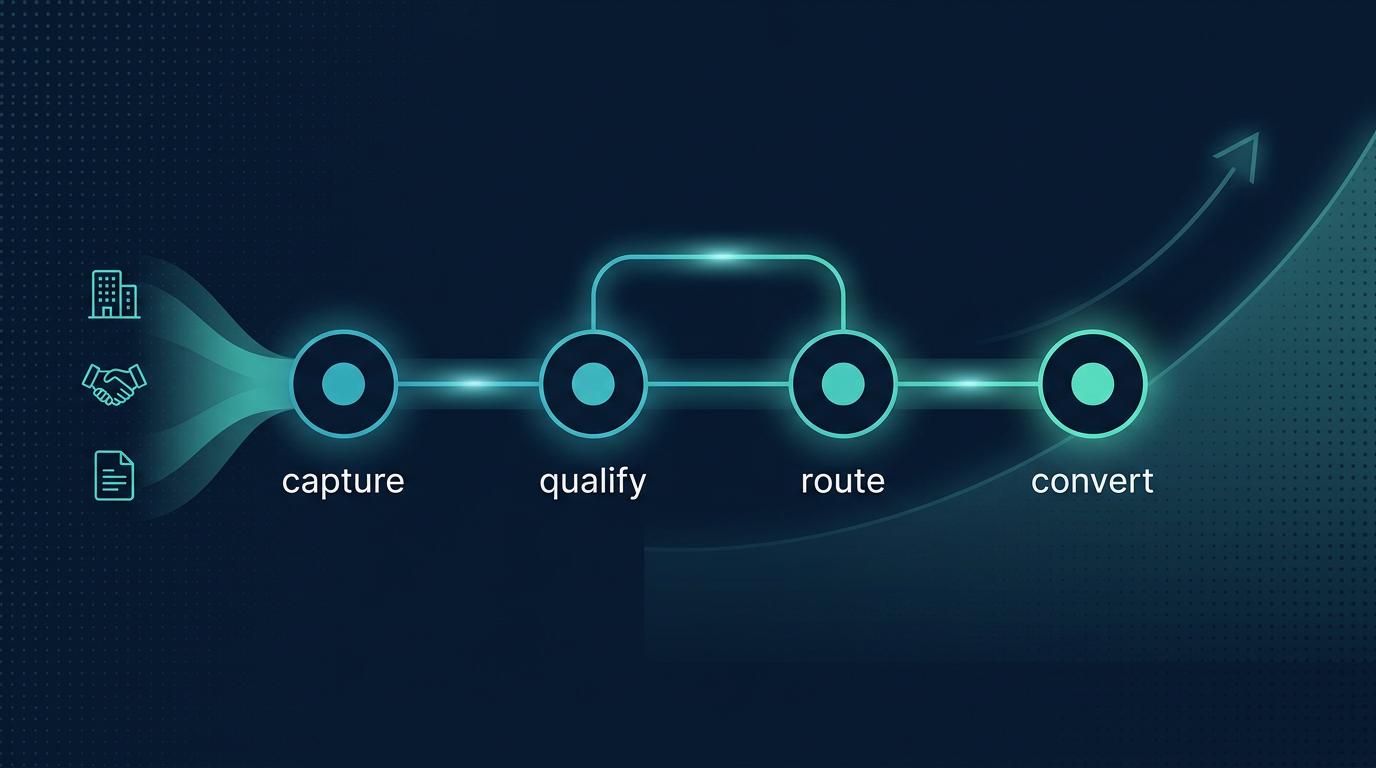
This is where lead scoring and lead nurturing come in, not as standalone tactics, but as a connected system. When used together, they help teams understand who to engage, when to engage them, and how to move them forward, turning MoFu interest into real pipeline growth.
Are you struggling to identify which leads are actually sales-ready? Visit our Lead Qualification Criteria article and explore how modern lead scoring models work.
Lead Scoring vs. Lead Nurturing: Different Roles, Same Goal
Lead scoring and lead nurturing are often discussed separately, but they serve complementary purposes.
Lead scoring helps you quantify buyer intent. By assigning scores based on behavior, engagement, and fit, marketing and sales gain visibility into which leads are warming up and which ones still need time. A strong lead scoring model turns raw engagement into a shared signal of readiness.
Lead nurturing, meanwhile, is about relationship-building. Through targeted content and timely touchpoints, nurturing educates buyers, builds trust, and helps them progress through their decision-making journey.
The challenge arises when these two systems operate in silos. Scoring without nurturing creates pressure to pass leads too early. Nurturing without scoring leads to generic journeys that ignore buyer intent.
Learn how scoring and nurturing work best when built as one system, not separate workflows, with our From Lead Chaos to Clarity Scoring article.
Why Lead Scoring and Nurturing Work Better Together
At a strategic level, lead scoring answers “who is ready?” while lead nurturing answers “what do they need next?”
When combined, they create a powerful feedback loop:
- Scoring detects changes in buyer behavior
- Nurturing responds with relevant, timely engagement
- Engagement feeds back into scoring, refining readiness signals
This alignment allows marketing to deliver the right message at the right moment, while giving sales confidence that leads being passed over aren’t just active; they’re prepared for a conversation.
See how intent signals can automatically shape buyer journeys in our Align Sales and Marketing Around Lead Scores article.
The Trigger Point: Using Score Changes to Activate Nurture Journeys
One of the biggest mistakes teams make is treating nurture programs as static email tracks. Buyers aren’t static; their urgency and intent evolve as they research and compare options.
That’s why score changes matter more than score totals.
A spike in engagement, repeated visits to high-intent pages, or interaction with product-focused content often signals momentum. These moments are ideal triggers for shifting a lead into a more relevant nurture journey.
For example:
- A lead moving from low to mid score may benefit from educational content
- A lead crossing a high-score threshold may need demos, comparisons, or ROI proof
- A score drop could trigger re-engagement or objection-handling content
If you are not sure which behaviors should trigger nurture changes, read our article on Behavioral vs. Demographic Lead Scoring.
Designing Smarter Nurture Journeys by Score Stage
When lead scoring informs nurturing, journeys become more intentional and effective.
Low-to-Mid Score Nurture: Education and Problem Framing
At this stage, buyers are exploring.
- Industry insights and trends
- Use cases aligned to their challenges
- Thought leadership that validates the problem
This builds trust while quietly increasing engagement signals.
Mid Score Nurture: Solution Awareness and Differentiation
As intent increases, buyers want clarity.
- Product value and differentiation
- Customer stories and outcomes
- Light ROI and impact messaging
Nurturing helps buyers connect their needs to possible solutions.
High Score Nurture: Buying Enablement
High-scoring leads need confidence, not more education.
- Buying guides and implementation details
- Security, compliance, and integration content
- Clear next-step CTAs
At this point, nurturing should feel like enablement, not persuasion.
Discover when to stop nurturing and start selling with our Introduction to Deal Stages and Lead Statuses article.
Bridging Marketing and Sales with Shared Signals
One of the biggest benefits of aligned scoring and nurturing is stronger marketing–sales alignment.
Marketing gains clarity on when a lead is truly ready to escalate. Sales gains context, including what the buyer engaged with, what problems matter most, and why the lead is warm now.
Once nurtured leads are ready, lead routing ensures fast, accurate handoff to sales, preserving momentum and improving conversion rates.
Once leads are ready, make sure they reach the right sales rep instantly: Book a systems strategy call to discuss lead routing for your business.
Common Mistakes to Avoid
Even mature teams can stumble when implementing scoring-driven nurturing.
Some common pitfalls include:
- Treating lead scores as static numbers rather than dynamic signals
- Continuing to nurture high-intent leads instead of routing them to sales
- Passing leads to sales without behavioral context
- Failing to adjust journeys as engagement patterns change
Avoiding these mistakes requires viewing scoring and nurturing as living systems, not set-and-forget workflows.
Avoid costly handoff mistakes by aligning scoring, nurturing, and routing. Book a systems strategy call to discuss lead scoring and routing for your business.
Measuring What Matters: Proving Conversion Impact
To build confidence and internal buy-in, teams need to measure outcomes, not just activity.
Key metrics include:
- Conversion rate by score stage
- Time to sales-ready
- Sales acceptance rate
- Pipeline velocity influenced by nurturing
When scoring drives nurturing, teams typically see faster MoFu progression and stronger pipeline quality.
Track what actually moves revenue, not just engagement, by learning how to navigate your CRM reports and dashboards.
From Isolated Tactics to a Conversion Engine
Lead scoring identifies readiness. Lead nurturing builds momentum. Together, they create a conversion engine that adapts to buyer behavior and aligns marketing and sales around shared signals.
For MoFu teams, success isn’t about more automation; it’s about smarter orchestration. When score changes trigger relevant nurturing, and sales handoff happens at the right moment, interest turns into intent and intent turns into revenue.
Book a systems strategy call to discuss lead scoring and routing for your business.