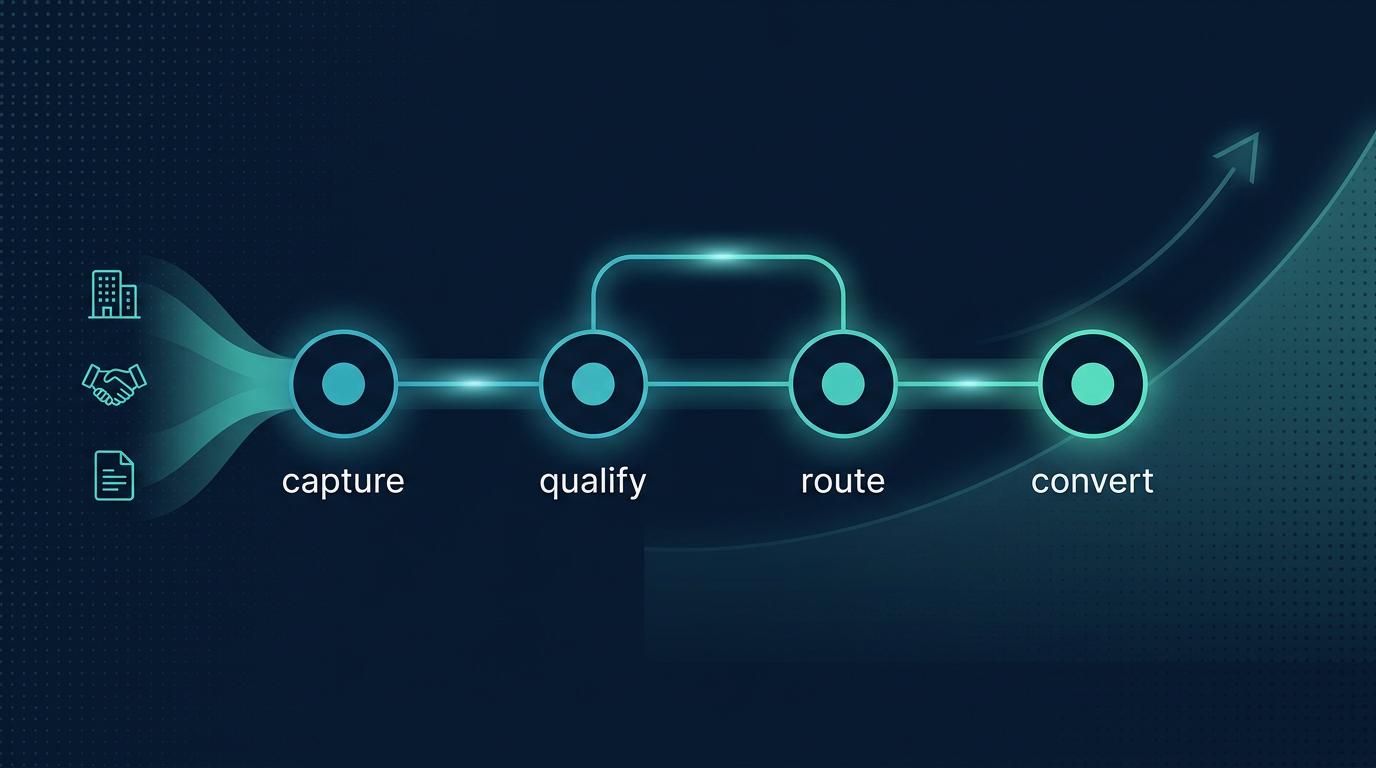


The Illusion of a Healthy Pipeline
Your dashboard says you’re winning. Hundreds of leads. Dozens of opportunities. A pipeline that looks full enough to hit your targets. But the quarter ends… and revenue doesn’t follow.
Sound familiar?
This is one of the most common (and costly) problems in SaaS: a pipeline that looks healthy on paper but is quietly packed with unqualified leads.
The issue isn’t always effort. Or even demand. It’s quality.
In many SaaS organisations, poor lead quality isn’t a one-off mistake. It’s the result of how the entire go-to-market engine is set up.
What “Unqualified” Really Means in SaaS
In SaaS, a qualified lead isn’t just someone who filled out a form or booked a demo.
A truly qualified lead typically has:
- A real problem your product solves
- The right level of urgency
- Alignment with your pricing and model
- Decision-making influence or access to it
An unqualified lead, on the other hand, might:
- Be too early in their journey
- Lack budget or authority
- Not fit your ideal customer profile (ICP)
- Be exploring, not buying
Unqualified doesn’t mean useless. It just means not ready, or not right, for sales.
The Hidden Cost of a Bloated SaaS Pipeline
A pipeline full of low-quality leads creates drag across your entire revenue engine:
- Sales teams waste time chasing deals that will never close
- Forecasts become unreliable, leading to missed targets
- Sales cycles stretch, hurting efficiency and CAC
- Conversion rates drop, masking real performance issues
- High-fit leads get less attention, reducing win rates
In SaaS, predictability is important, so issues like these become a serious growth constraint.
7 Reasons SaaS Pipelines Become Full of Unqualified Leads
1. Volume-Driven Growth Targets
Many SaaS teams are still measured on:
- MQL volume
- Cost per lead
- Traffic and form fills
This results in campaigns optimised for quantity over quality, filling the funnel with low-intent prospects.
2. A Weak or Outdated ICP
Your Ideal Customer Profile may:
- Be too broad for example “any SMB”
- Ignore product usage realities
- Lack input from sales or customer success
In SaaS, product-market fit is important, so even small ICP misalignments can flood your pipeline with poor-fit accounts.
Learn more about deciding your Ideal Customer Profile (ICP)
3. Broken MQL → SQL Handoffs
One of the biggest culprits:
- Leads passed to sales too early
- Inconsistent qualification criteria
- No shared definition of “sales-ready”
This creates friction, and a pipeline full of leads that were never ready to convert.
4. Gated Content That Attracts the Wrong Audience
Ebooks, templates, and webinars are great for demand generation… but in SaaS, they often attract:
- Students and researchers
- Competitors
- Early-stage problem explorers
A content download does not equal buying intent. Yet many of these leads still end up in the pipeline.
5. No Real Intent Data
Most SaaS teams still rely heavily on:
- Job titles
- Company size
- Industry
But these are static signals. Without behavioral or intent data (e.g., product engagement, repeat visits, pricing page activity), it’s nearly impossible to tell who is actually in-market.
Learn more about Behavioral and Demographic Lead Scoring
6. Outdated Lead Scoring Models
Traditional scoring models often:
- Overvalue superficial actions (e.g., one webinar signup)
- Ignore deeper engagement signals
- Lack feedback from closed deals
Over time, they drift further from reality, sending the wrong leads to sales.
7. No Closed-Loop Feedback
In many SaaS organisations:
- Sales rejects leads, but insights aren’t captured
- Marketing doesn’t see which leads actually convert
- RevOps lacks a unified view of performance
Without feedback, the system keeps producing the same low-quality pipeline.
Warning Signs Your SaaS Pipeline Has a Quality Problem
To check if this applies to you, look for these signals:
- High pipeline volume, but low win rates
- Deals stalling early. For example, after discovery or demo
- Long and inconsistent sales cycles
- Reps ignoring or cherry-picking leads
- High percentage of “no decision” outcomes
If any of these sound familiar, the issue likely isn’t demand, it’s qualification.
Learn more about Lead Qualification.
Why This Problem Is So Hard to Fix in SaaS
Even high-performing SaaS teams struggle with this, because the problem is systemic:
- Pressure to hit aggressive growth targets
- Misaligned incentives between marketing and sales
- Siloed tools and fragmented data
- Legacy processes that haven’t evolved with the market
In other words, your pipeline reflects your system.
A Better Way to Think About Pipeline Health
The most effective SaaS companies are shifting their mindset:
From “How many leads did we generate?”
To “How many qualified opportunities did we create?”
This means focusing on:
- Fit (does this account match our ICP?)
- Intent (are they actively evaluating solutions?)
- Readiness (are they ready to engage sales?)
Pipeline quality becomes a measurable, optimisable metric, not a guessing game.
How to Start Diagnosing Your Pipeline
You don’t need a full overhaul to start seeing improvements.
Begin with a simple diagnostic:
- Review your last 20–50 closed-lost deals
- Compare your ICP against your actual customers
- Break down conversion rates by lead source
- Ask sales: “Which leads are actually worth your time?”
- Identify where leads are slipping through unqualified
You’ll often find the issues are surprisingly consistent and fixable.
How Modern Martech Solves This
This is where modern SaaS go-to-market teams are evolving.
Instead of relying on static qualification, they’re using:
- Behavioral data to track real engagement
- Intent signals to identify in-market buyers
- Dynamic scoring models that adapt over time
- Funnel analytics to pinpoint breakdowns
The goal isn’t just more leads. It’s a clean, high-confidence pipeline that sales can trust.
A Full Pipeline Isn’t the Goal. A Qualified Pipeline Is
In SaaS, growth doesn’t come from filling the funnel. It comes from filling it with the right opportunities.
If your pipeline feels busy but not productive, that’s not a sales problem. It’s a qualification problem. And once you fix that, everything downstream starts to improve; including conversion rates, sales velocity and revenue predictability.
If you want to know if your pipeline is actually working, start by asking a simple question:
How many of your current opportunities would your best sales rep choose to work on?
If the answer isn’t “most of them,” it might be time for a closer look.